How to propagate jade plant in water
1st Nov 2026 | Daniel Jackson | Crassula | 7 mins

Jade plants can be propagated in water by placing a healthy cutting or single leaf into a clean glass or jar, allowing roots to develop before transferring to soil. This method is popular with beginners because it lets you watch root growth progress in real time, giving you a clear signal of when the cutting is ready to pot up.
What Is the Best Way to Propagate a Jade Plant?
The best propagation method depends on what you have available and how patient you are, but stem cuttings consistently produce the most reliable results. A healthy stem cutting taken just below a leaf node has enough stored energy to push out roots relatively quickly, whether you choose water or soil as your rooting medium.
Water propagation has become a popular choice because it removes the guesswork entirely. You can see the roots forming week by week, which takes the uncertainty out of the process for anyone who has previously lost cuttings to premature potting or overwatering in soil.
| Propagation Method | Average Time to Roots | Success Rate | Best For |
|---|---|---|---|
| Stem cutting in water | 2 to 4 weeks | High | Beginners, visual learners |
| Stem cutting in soil | 3 to 5 weeks | High | Direct growing, less handling |
| Leaf propagation in water | 4 to 8 weeks | Moderate | Small-scale propagation |
| Leaf propagation in soil | 5 to 10 weeks | Moderate | Experienced growers |
Looking for Crassulas Inspiration? Check Out Our Award Winning Crassulas Collections
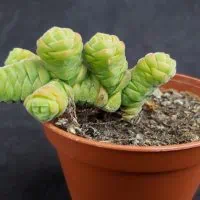
Can You Cut a Branch Off a Jade Plant and Replant It?
Yes, you can cut a branch off a jade plant and successfully replant it, provided you follow a few straightforward steps. Use a clean, sharp knife or pair of scissors to take a cutting of around 7 to 10 cm, then leave it on a dry surface for two to three days so the cut end can callous over before it touches water or soil.
This callousing stage is genuinely important. A fresh, unhealed cut placed directly into water can rot before roots ever have a chance to form, so skipping this step is one of the most common reasons water propagation fails for jade plants.
Jade Plant Water Propagation: Step by Step
Once your cutting has calloused, place it into a small glass or jar filled with room-temperature water, making sure only the bare stem is submerged and no leaves are touching the surface. Position the glass somewhere bright but away from direct harsh sunlight, and change the water every five to seven days to keep it fresh and oxygenated.
Roots typically begin to appear within two to four weeks, though this can vary depending on the time of year and how warm your home is. Once the roots reach around 2 cm in length, the cutting is ready to move into a well-draining succulent compost mix.
| Water Propagation Stage | Timeframe | What to Look For |
|---|---|---|
| Callousing the cut end | 2 to 3 days | Dry, slightly sealed cut surface |
| Initial root emergence | 1 to 2 weeks | Small white nubs at the base of the stem |
| Roots ready for potting | 2 to 4 weeks | Roots 2 cm or longer |
| Established in soil | 4 to 6 weeks after potting | New leaf growth appears |
Do Jade Plants Like Big or Small Pots?
Jade plants consistently prefer smaller pots over large ones, and this preference is closely tied to their water storage habits. Because jade plants retain moisture in their thick leaves and stems, planting them in an oversized pot means the surrounding compost stays wet for far longer than the roots can handle, which quickly leads to root rot.
When potting up a rooted cutting from water, choose a pot only slightly larger than the root ball, typically around 5 to 7 cm in diameter for a young plant. As the plant matures, you can move up one pot size every two to three years, which encourages steady, healthy growth without creating the waterlogged conditions jade plants struggle in.
The RHS (Royal Horticultural Society) recommends growing jade plants in terracotta pots where possible, as the porous material allows excess moisture to evaporate through the sides of the pot, further reducing the risk of waterlogging.
For UK growers looking at broader plant health guidance, the UK Government’s Horticultural Code of Practice provides useful context on growing conditions and plant welfare standards that apply to home growers and nurseries alike.
Looking for Unique Crassulas? Check Out Our Stunning Crassulas Collections

What Is the Lifespan of a Jade Plant?
Jade plants are remarkably long-lived, and under the right conditions they can survive for several decades. It is not uncommon for a well-cared-for jade plant to outlive its owner, with some specimens in botanical collections reportedly reaching over 100 years.
In a typical UK home environment, a jade plant kept on a sunny windowsill with infrequent but thorough watering and annual repotting can comfortably reach 20 to 30 years. The key factors that shorten their lifespan are persistent overwatering, insufficient light, and root-bound conditions that go unaddressed for too long.
How to Propagate Jade Plant in Water and Grow a Thriving Plant
Learning how to propagate jade plant in water is one of the most rewarding things a houseplant enthusiast can do, partly because it works so reliably and partly because jade plants are so willing to grow. The whole process from cutting to established plant can take as little as six to eight weeks, making it a satisfying project even for those who are relatively new to propagation.
Beyond propagation, success with jade plants comes down to consistency over time. They do not need frequent attention, but they do need the right conditions maintained steadily: bright indirect light, well-draining compost, restrained watering, and a pot that fits without excess. Getting those fundamentals right from the moment you pot up your rooted cutting gives it the strongest possible start.
Jade plants reward patience. The cuttings that take a little longer to root, the plants left to become slightly root-bound before repotting, and the leaves that eventually drop and produce tiny new plantlets on their own are all part of what makes this species so fascinating to grow over a long period of time.
- Take stem cuttings of 7 to 10 cm, allow them to callous for two to three days before placing in water, and change the water weekly to prevent bacterial build-up.
- Always pot rooted cuttings into a small container with well-draining succulent compost, choosing terracotta pots where possible to reduce waterlogging risk.
- With the right care, a jade plant propagated from a single cutting can thrive for decades, making it one of the most rewarding long-term houseplants you can grow in the UK.
How to Propagate Jade Plant in Water: Frequently Asked Questions
1. Can you propagate a jade plant in just water without ever using soil?
You can root a jade plant cutting entirely in water, but it will eventually need to be transferred to compost to grow into a healthy, mature plant. Water alone does not provide the nutrients or structural support that jade plants need long-term.
2. How long does it take for jade plant cuttings to root in water?
Most jade plant cuttings will begin to show roots within one to two weeks and be ready to pot up within two to four weeks. Warmer temperatures and brighter (but indirect) light will speed up the process.
3. Should I change the water during jade plant water propagation?
Yes, you should change the water every five to seven days to prevent bacteria from building up and to keep oxygen levels in the water topped up. Stagnant water is one of the most common reasons cuttings rot before they root.
4. What type of water is best for propagating jade plants?
Tap water works perfectly well for most UK growers, though leaving it to sit overnight allows any chlorine to dissipate, which some growers prefer. Rainwater is an excellent alternative if you collect it, as it tends to be softer and slightly more acidic, which jade plants tolerate well.
5. How do I know when a jade plant cutting is ready to be moved from water to soil?
Your cutting is ready to pot up once its roots reach approximately 2 cm in length and look white or pale yellow. Roots that have turned brown or mushy are a sign of rot and the cutting should be trimmed and restarted.
6. Do I need rooting hormone to propagate jade plants in water?
Jade plants do not require rooting hormone and root readily without it, which is one of the reasons they are so popular for beginner propagation. If you do choose to use it, a light application to the calloused end before placing in water can encourage slightly faster rooting.
7. Can jade plant leaves be propagated in water?
Yes, individual leaves can be propagated in water by resting the base of the leaf just at the water’s surface without fully submerging it. The process takes longer than stem cuttings, typically four to eight weeks, and success rates are somewhat lower.
8. What is the ideal temperature for propagating jade plants in water in a UK home?
A consistent room temperature of around 18 to 24°C is ideal for jade plant water propagation. Most UK homes maintain this range comfortably during spring and summer, which is why those seasons tend to produce the fastest results.
9. Why are my jade plant cuttings rotting in water rather than rooting?
Rot usually occurs because the cut end was not fully calloused before being placed in water, or because the water was not changed frequently enough. Ensuring no leaves are submerged and placing the cutting in a bright, airy spot also reduces the risk significantly.
10. Can I use a rooted jade plant cutting from water as a gift?
Absolutely, and jade plants are actually considered symbols of good luck and prosperity in many cultures, making them a thoughtful and meaningful gift. You can read more about the cultural significance of jade plants on the Wikipedia page for Crassula ovata, which covers their history, symbolism, and native origins.
11. How many cuttings can I take from one jade plant at a time?
You can take several cuttings from a healthy, established jade plant without harming it, as long as you do not remove more than around a third of its foliage at once. Giving the parent plant time to recover between heavy pruning sessions keeps it strong and productive.
12. Should jade plant water cuttings be kept in the light or the dark?
Bright, indirect light is best for jade plant cuttings in water, as it encourages root growth without scorching the vulnerable stem. Avoid placing them on a south-facing windowsill during peak summer months, where direct sunlight could heat the water and damage developing roots.
13. What compost should I use when transferring a jade plant from water to soil?
A specialist cactus and succulent compost is the best choice, as it drains freely and prevents the waterlogging that jade plants are particularly susceptible to. You can also mix standard peat-free compost with perlite or coarse horticultural grit at a roughly 50/50 ratio for a cost-effective alternative.
14. Are jade plants safe to grow around pets and children in a UK home?
Jade plants are considered mildly toxic to cats and dogs if ingested, which is worth being aware of if you have curious pets in your household. The UK Government’s Animal and Plant Health Agency (APHA) provides guidance on plant safety and biosecurity for UK households and growers.