How to take care of a Crassula plant indoors?
30th Jul 2026 | Daniel Jackson | Crassula | 7 mins

Crassula plants are some of the most rewarding houseplants you can grow indoors. They are hardy, architecturally striking, and, when looked after well, can live for decades in a bright windowsill or sunny corner of a room.
That said, “easy” doesn’t mean “effortless.” Understanding what a Crassula actually needs, and equally what it doesn’t need, is the difference between a thriving plant and one that slowly declines without you quite knowing why.
How Often Should I Water a Crassula Plant Indoors?
Watering is where most people go wrong with Crassula plants. They are succulents, which means they store water in their thick, fleshy leaves and stems, and they are far more likely to suffer from too much water than too little.
As a general rule, water your Crassula thoroughly and then allow the soil to dry out completely before watering again. During spring and summer, this typically means watering every ten to fourteen days. In autumn and winter, when the plant’s growth slows considerably, you can extend that to once every three to four weeks without any ill effect.
| Season | Watering Frequency | Soil Check Before Watering |
|---|---|---|
| Spring | Every 10 to 14 days | Top 2 to 3 cm fully dry |
| Summer | Every 10 to 14 days | Top 2 to 3 cm fully dry |
| Autumn | Every 21 to 28 days | Soil mostly dry throughout |
| Winter | Every 28 to 35 days | Soil fully dry throughout |
Looking for CrassulasInspiration? Check Out Our Award Winning Crassulas Collections

Can I Water My Crassula Plant with Tap Water?
Tap water is generally fine for Crassula plants, but the quality of your local supply does matter. Hard water, which is common across much of England, contains higher levels of calcium and magnesium. Over time, these minerals can accumulate in the soil and around the base of the pot, sometimes appearing as a white crusty residue.
If you notice this build-up, or if your plant seems to be struggling despite correct watering habits, switching to filtered water or leaving tap water to stand overnight before use can help. Rainwater collected in a clean container is an excellent alternative and is particularly well-suited to succulents. The key thing is to avoid cold water straight from the tap in winter, as the temperature shock can stress the roots.
What Are Common Crassula Plant Problems Indoors?
The most frequently encountered Crassula problems all stem from the same root cause: too much moisture. Overwatering leads to root rot, which is the single biggest killer of jade plants and other Crassula varieties grown indoors. The symptoms can be deceptive at first, presenting as soft or yellowing leaves rather than visibly damaged roots, by which point the rot may already be well established.
Beyond overwatering, common issues include mealybugs (white, cottony clusters found in leaf joints), scale insects (brown, shell-like bumps on stems), and fungal problems caused by poor air circulation. Leggy, stretched growth is another frequent complaint and is almost always caused by insufficient light rather than any nutritional deficiency. Moving the plant closer to a south or west-facing window usually resolves this within a few weeks.
| Problem | Likely Cause | Recommended Action |
|---|---|---|
| Soft, mushy stems | Root rot from overwatering | Remove affected roots, repot in dry compost |
| Yellowing leaves | Overwatering or low light | Reduce watering, move to brighter spot |
| Wrinkled, shrivelled leaves | Underwatering | Water thoroughly and allow to drain |
| White cottony clusters | Mealybug infestation | Treat with neem oil or isopropyl alcohol |
| Leggy, stretched growth | Insufficient light | Relocate to south or west-facing window |
| White crusty deposit on soil | Hard water mineral build-up | Switch to rainwater or filtered water |
What Not to Do with a Crassula Plant Indoors
There are a handful of mistakes that are so common they are worth addressing directly. The first is leaving a Crassula sitting in a saucer of water. Even briefly, standing water prevents the roots from getting the air they need and accelerates the conditions that cause rot. Always empty drainage saucers after watering.
The second is placing the plant in a cold or draughty spot. Crassula plants are native to South Africa and prefer temperatures between 15°C and 24°C year-round. They will tolerate brief dips, but prolonged exposure to temperatures below 10°C, particularly combined with damp soil, is very likely to cause permanent damage. Keep them away from cold windowsills in winter and never place them near an exterior door that is regularly opened in cold weather.
Looking for Unique Crassulas? Check Out Our Stunning Crassulas Collections
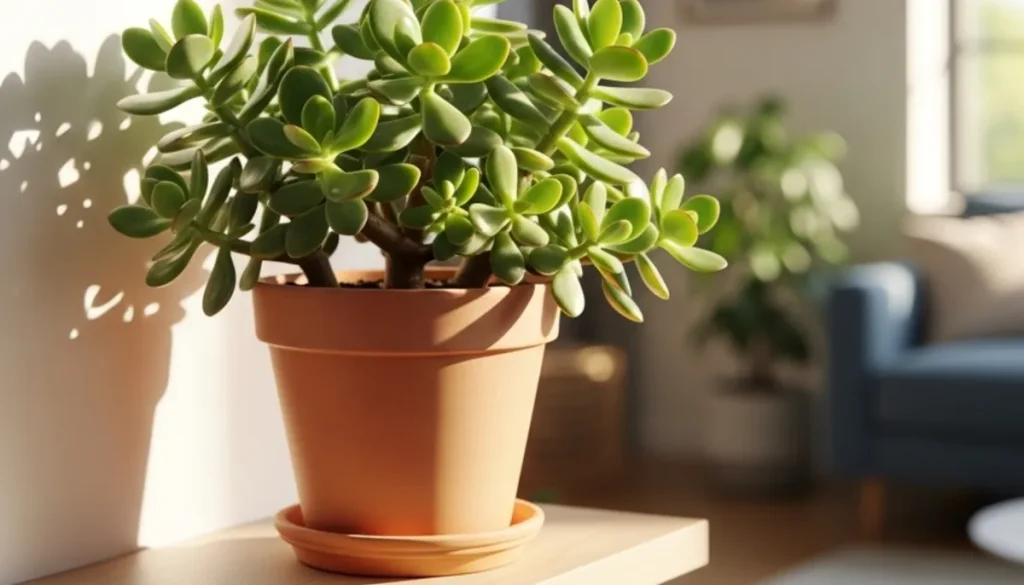
How to Take Care of a Crassula Plant Indoors: Everything You Need to Know
Taking care of a Crassula plant indoors comes down to a few consistent habits rather than any complicated routine. Light, water, and temperature are the three variables that matter most, and getting all three broadly right will see most Crassula varieties thrive with very little additional attention. A free-draining compost, ideally a dedicated cactus and succulent mix, and a pot with drainage holes are non-negotiable foundations.
Feeding is worth a brief mention here. A diluted, low-nitrogen fertiliser applied once a month during spring and summer is beneficial, but it is not something to obsess over. Crassula plants grow slowly and do not need heavy feeding. Overfeeding, particularly with nitrogen-rich fertilisers, tends to produce weak, soft growth that is more susceptible to pests and disease.
The reward for getting the basics right is a plant that genuinely improves with age. Older specimens develop a wonderfully gnarled, tree-like structure that gives them real character. For more background on the genus, the Wikipedia page on Crassula provides a thorough overview of the species and their natural habitat. The Royal Horticultural Society also offers detailed growing guidance for jade plants as part of its wider houseplant resources.
- Crassula plants need bright, indirect light, well-draining compost, and a strict “soak and dry” watering approach to stay healthy indoors.
- The most common problems, including root rot, leggy growth, and pest infestations, are almost always the result of overwatering or insufficient light rather than any complex care failure.
- Avoiding cold draughts, standing water, and overfeeding will protect your plant from the most preventable causes of long-term decline.
Our Most Popular Cacti and Succulents
-

Ottershaw Cacti Succulent Fertiliser – Everything succulents need to flourish
£7.50Ottershaw Cacti Succulent Fertiliser - Give your plants everything they need to flourish.
Buy Now -
Aeonium ‘Jubilee’ – Award Winning Succulent Plant
£10.00Launched May 2022 at RHS Chelsea Flower Show. This lollipop-shaped plant with glorious copper...
Buy Now -
Aeonium Arboreum ‘Luteovariegatum’- Tall Succulent AKA ‘Variegatum’
£10.00Awarded AGM. Variegated tall upright, freely branching Aeonium.
Buy Now -
Aeonium ‘Toffee Apple’ – Ottershaw Hybrid Succulent
£10.00A Striking compact Aeonium filled with light purple coloured medium heads with vibrant green...
Buy Now -
Aeonium ‘Zwartkop’ – Black Rose / Bold, Dark Succulent
£8.50Awarded AGM. Popular tall growing, single headed, dark leaved Aeonium
Buy Now -
Aeonium ‘Kiwi’ – Beautiful Blush-tipped Aeonium AKA ‘Dream Color’
£8.50Recently awarded AGM. A delightful hard leaved variegated bush forming Aeonium, with variegated yellow,...
Buy Now -
Aeonium ‘Pink Witch’ – Vibrant Pink House-Leek
£25.00Aeonium 'Pink Witch' has fantastic PINK colouring which she keeps all year round. Rare...
Buy Now -
Aeonium ‘Black Velvet’ – Intensely Dark
£10.00Intensely dark and matt headed Aeonium. Leaves are short and heads compact with fewer...
Buy Now -
Aeonium ‘Colossus’ – Oversized Dark Rosette
£10.00It grows BIG! Each Aeonium heads can grow 35cm+ when potted on and fed....
Buy Now -
Aeonium ‘Nights Watch’ – Award winning Succulent
£10.00Award winning, upright growing, compact, dark leaved plant that forms an unusual pyramid shape.
Buy Now


How to Take Care of a Crassula Plant Indoors: Frequently Asked Questions
1. What type of soil is best for a Crassula plant grown indoors? A gritty, free-draining compost is essential; a proprietary cactus and succulent mix works very well. You can also make your own by combining standard potting compost with perlite or coarse horticultural grit in roughly equal parts.
2. How much light does a Crassula plant need indoors? Crassula plants need a minimum of four hours of direct or bright indirect sunlight per day to thrive. A south or west-facing windowsill is ideal in the UK, where natural light levels are lower for much of the year.
3. How large can a Crassula plant grow indoors? With good care, a jade plant (Crassula ovata) can reach between 90cm and 120cm in height indoors over many years. Growth is slow, typically a few centimetres per year, so the plant remains manageable for a very long time.
4. Does a Crassula plant need feeding? A diluted cactus fertiliser applied once a month during the growing season (spring and summer) is sufficient. Avoid feeding during autumn and winter when the plant is largely dormant.
5. Can Crassula plants be toxic to pets? Yes, Crassula ovata (jade plant) is considered toxic to cats and dogs if ingested. The Animal Poison Line, run by the Veterinary Poisons Information Service in the UK, is a useful resource if you are concerned.
6. When should I repot my Crassula plant? Repot when the roots begin to emerge from the drainage holes or the plant becomes visibly top-heavy and unstable. Spring is the best time to repot, as the plant is entering its active growing period.
7. Why are the leaves falling off my Crassula plant? Leaf drop in Crassula is most often caused by overwatering, sudden temperature changes, or moving the plant to a significantly different light environment. Addressing the most likely cause first will usually see new growth resume within a few weeks.
8. Should I mist my Crassula plant? No; Crassula plants do not benefit from misting and can actually be harmed by it, as moisture sitting on the leaves encourages fungal problems. Normal indoor humidity levels are perfectly adequate for this genus.
9. How do I propagate a Crassula plant? Crassula plants are easy to propagate from stem or leaf cuttings. Allow the cut end to callous over for a day or two before placing it in dry compost, then wait until new roots establish before watering.
10. What is the ideal temperature for a Crassula plant indoors? Crassula plants prefer temperatures between 15°C and 24°C. They can tolerate brief dips to around 10°C but should not be exposed to frost or prolonged cold, particularly when the soil is wet.
11. How do I know if my Crassula has root rot? The earliest signs are soft or mushy stems at the base and leaves that feel spongy rather than firm. If you suspect root rot, remove the plant from its pot, trim away any blackened or mushy roots, and repot into fresh, dry compost.
12. Can Crassula plants survive in low light indoors? They can survive in lower light but will not thrive; growth becomes slow and leggy, and the plant loses its compact, attractive shape. A grow light can supplement natural light during darker UK winter months if a bright windowsill is not available.
13. Is a jade plant the same as a Crassula plant? Jade plant is the common name for Crassula ovata, which is the most widely grown species in the Crassula genus. The broader Crassula genus contains over 200 species, as detailed on the Wikipedia Crassula page, though ovata is by far the most popular as a houseplant.
14. How do I treat mealybugs on a Crassula plant? Dab affected areas with a cotton bud dipped in isopropyl alcohol, or apply a diluted neem oil solution to the whole plant. Repeat every seven to ten days until no signs of infestation remain, and isolate the plant from other houseplants in the meantime.