Types of Senecio plants
21st Oct 2026 | Daniel Jackson | Senecio | 8 mins
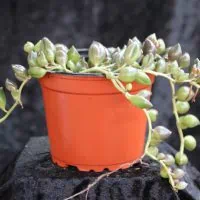
Senecio is one of the largest and most varied plant genera on earth, encompassing well over a thousand species that range from trailing succulents to bold architectural shrubs. Whether you’re drawn to the silvery blue rosettes of ground-hugging varieties or the dramatic sculptural forms used in contemporary garden design, understanding the different types of Senecio plants is the first step to growing them well.
Common Names for Senecio Plants
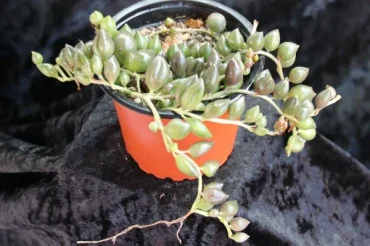
Senecio plants go by a wide range of common names depending on the species, which can make identification a little confusing at first. The genus name itself comes from the Latin word senex, meaning old man, a reference to the fluffy white seed heads that appear after flowering on many species. Some of the most widely used common names include string of pearls (Senecio rowleyanus), blue chalk sticks (Senecio mandraliscae), silver ragwort (Senecio cineraria), and string of bananas (Senecio radicans).
These common names often reflect the plant’s appearance or growth habit, which makes them a useful starting point when you’re browsing garden centres or online plant shops. It’s worth knowing the Latin name alongside the common one, though, because Senecio taxonomy has shifted considerably over the years and some species have been reclassified into related genera such as Curio and Jacobaea while still being sold under the Senecio label in retail settings.
Popular Types of Senecio Plants and Their Key Traits
| Species | Common Name | Growth Habit | Light Preference | Hardy in UK? |
|---|---|---|---|---|
| Senecio rowleyanus | String of Pearls | Trailing | Bright indirect | No (tender) |
| Senecio mandraliscae | Blue Chalk Sticks | Ground cover | Full sun | Borderline |
| Senecio serpens | Blue Chalksticks | Ground cover | Full sun | Borderline |
| Senecio cineraria | Silver Ragwort | Bushy/mounding | Full sun | Yes (coastal) |
| Senecio radicans | String of Bananas | Trailing | Bright indirect | No (tender) |
| Senecio macroglossus | Natal Ivy | Climbing/trailing | Bright indirect | No (tender) |
| Senecio articulatus | Hot Dog Cactus | Upright succulent | Full sun | No (tender) |
Looking for Inspiration? Check Out Our Award Winning Senecio Collection
Are Senecio Plants Perennial or Annual?
Whether Senecio plants come back every year depends largely on the species you’re growing and the climate in which you’re growing it. Many Senecio varieties are naturally perennial in their native habitats, particularly the succulent species originating from South Africa, where frost is rarely a concern. In the UK, however, the picture is more nuanced because our winters can be cold enough to kill off tender species unless they’re given some protection.
Senecio cineraria, commonly used as a summer bedding plant, is technically a perennial but is almost always treated as an annual in cooler UK gardens because it rarely survives a hard winter outdoors. Succulent types such as Senecio rowleyanus and Senecio radicans are best kept as houseplants year-round or moved indoors before the first frosts arrive, where they will continue growing happily from one year to the next. With the right conditions, many Senecio species will reliably return season after season.
Common Problems with Senecio Plants
Senecio plants are generally undemanding, but they are not entirely problem-free. The most frequent issue growers encounter is overwatering, which causes root rot in succulent species particularly quickly because these plants have adapted to survive long dry periods in their natural environments. Signs of overwatering include yellowing leaves, a mushy stem base, and leaves that feel soft and waterlogged rather than firm and plump.
Pest-wise, mealybugs and aphids are the most common culprits, with mealybugs tending to cluster in the joints between leaves and stems where they can be tricky to spot. Outdoor Senecio plants can also attract vine weevil, whose larvae cause significant root damage that often goes unnoticed until the plant starts to collapse. Checking the undersides of leaves regularly and keeping growing conditions as close to the plant’s natural preferences as possible goes a long way towards preventing most problems before they take hold.
It is also worth noting that many Senecio species are toxic to pets and humans if ingested. The Health and Safety Executive provides guidance on poisonous plants that is useful for anyone growing Senecio in a household with children or animals. Additionally, for guidance on caring for plants in protected or listed garden environments in the UK, the Royal Botanic Gardens, Kew holds detailed records on Senecio taxonomy and conservation status that serious growers will find invaluable.
Buying New House Plants? Check Out Our Award Winning Senecio Collection
Senecio Mandraliscae vs Senecio Serpens
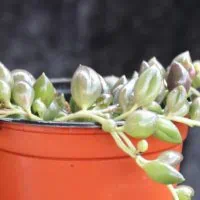
These two blue-toned succulent ground covers are so visually similar that they are frequently mislabelled and sold interchangeably, yet there are genuine botanical differences between them. Senecio mandraliscae typically produces longer, more finger-like leaves that can reach up to 7 cm in length, giving it a slightly more dramatic, spiky appearance when planted en masse. Senecio serpens, by contrast, has shorter, chunkier leaves that sit more closely together, creating a denser, more cushion-like mat of growth.
Both species are popular in modern low-maintenance landscaping and drought-tolerant planting schemes across the UK, particularly in coastal gardens where mild winters give them the best chance of surviving outdoors. The key practical difference for UK gardeners is that Senecio mandraliscae tends to grow slightly taller and spread more vigorously, making it better suited to filling larger spaces, while Senecio serpens works well in containers or smaller raised beds where a more compact habit is preferable.
Senecio Mandraliscae vs Senecio Serpens at a Glance
| Feature | Senecio mandraliscae | Senecio serpens |
|---|---|---|
| Leaf length | Up to 7 cm | Up to 3.5 cm |
| Leaf shape | Elongated, finger-like | Short, cylindrical |
| Mature height | 30 to 45 cm | 15 to 25 cm |
| Spread | Vigorous | Moderate |
| Best use | Large ground cover, slopes | Containers, small borders |
| Flower colour | White | White |
| Hardiness (UK) | Borderline hardy (USDA 10) | Borderline hardy (USDA 10) |
| Drought tolerance | High | High |
A Practical Guide to Growing Types of Senecio Plants Successfully
Understanding the different types of Senecio plants ultimately comes down to recognising that this is a genuinely diverse genus, not a single category of plant with one set of rules. Succulent Senecio species need gritty, free-draining compost and minimal watering, whereas leafier varieties like Senecio cineraria are more tolerant of regular moisture and will actually thrive in UK coastal conditions with little intervention. Matching the right species to the right environment makes the difference between a plant that struggles and one that flourishes.
For indoor growing, trailing species such as string of pearls and string of bananas are among the most rewarding houseplants you can keep, provided you resist the urge to overwater and position them somewhere bright. They do best in a south-facing windowsill during the growing season and benefit from a very dilute liquid fertiliser applied once a month between spring and early autumn. Outdoors, blue chalk sticks and silver ragwort bring real structural interest to gravel gardens, coastal planting schemes, and contemporary low-maintenance borders.
The Senecio genus, with its extraordinary breadth of form, is genuinely one of the most rewarding plant families to explore whether you’re a first-time succulent grower or a seasoned horticulturalist looking for something a little different. Getting to know even a handful of the most popular types opens up a wealth of planting possibilities that can transform containers, borders, and indoor spaces alike.
- Senecio is a vast genus containing over a thousand species ranging from trailing houseplant succulents to hardy outdoor ground covers, and choosing the right type for your space starts with understanding their individual needs.
- Overwatering is the single most common cause of failure with succulent Senecio species; free-draining compost and restrained irrigation are non-negotiable for these plants.
- Senecio mandraliscae and Senecio serpens are often confused and mislabelled in retail settings, but the key distinction is leaf length and overall spread, making each better suited to different planting scenarios.
Our Most Popular Succulents
-

Ottershaw Cacti Succulent Fertiliser – Everything succulents need to flourish
£7.50Ottershaw Cacti Succulent Fertiliser - Give your plants everything they need to flourish.
Buy Now -
Aeonium ‘Jubilee’ – Award Winning Succulent Plant
£10.00Launched May 2022 at RHS Chelsea Flower Show. This lollipop-shaped plant with glorious copper...
Buy Now -
Aeonium arboreum ‘Luteovariegatum’- Tall Succulent AKA ‘Variegatum’
£10.00Awarded AGM. Variegated tall upright, freely branching Aeonium.
Buy Now -
Aeonium ‘Toffee Apple’ – Ottershaw Hybrid Succulent
£10.00A Striking compact Aeonium filled with light purple coloured medium heads with vibrant green...
Buy Now -
Aeonium ‘Zwartkop’ – Black Rose / Bold, Dark Succulent
£8.50Awarded AGM. Popular tall growing, single headed, dark leaved Aeonium
Buy Now -
Aeonium ‘Kiwi’ – Beautiful Blush-tipped Aeonium AKA ‘Dream Color’
£8.50Recently awarded AGM. A delightful hard leaved variegated bush forming Aeonium, with variegated yellow,...
Buy Now -
Aeonium ‘Pink Witch’ – Vibrant Pink House-Leek
£25.00Aeonium 'Pink Witch' has fantastic PINK colouring which she keeps all year round. Rare...
Buy Now -
Aeonium ‘Black Velvet’ – Intensely Dark
£10.00Intensely dark and matt headed Aeonium. Leaves are short and heads compact with fewer...
Buy Now -
Aeonium ‘Colossus’ – Oversized Dark Rosette
£10.00It grows BIG! Each Aeonium heads can grow 35cm+ when potted on and fed....
Buy Now -
Aeonium ‘Nights Watch’ – Award winning Succulent
£10.00Award winning, upright growing, compact, dark leaved plant that forms an unusual pyramid shape.
Buy Now


Types of Senecio Plants: Frequently Asked Questions
1. What exactly is Senecio and where does it originate?
Senecio is a large genus within the daisy family (Asteraceae) that contains flowering plants, succulents, and shrubs distributed across every continent. The majority of succulent Senecio species that are popular in UK gardens and homes originate from southern Africa, particularly South Africa and Namibia. You can read more about the genus on the Wikipedia page for Senecio.
2. Are all types of Senecio plants succulents?
No, not all Senecio plants are succulents; the genus includes herbaceous perennials, climbing plants, shrubs, and annuals alongside the succulent varieties. The succulent species simply tend to be the most widely known because of their popularity as houseplants and garden specimens in the UK.
3. Is string of pearls the same as a Senecio plant?
String of pearls (Senecio rowleyanus, also reclassified as Curio rowleyanus in some taxonomies) is one of the most popular Senecio varieties, recognised by its trailing stems of small round leaves. It is widely available in UK garden centres and is almost exclusively grown as a houseplant in this climate.
4. Which types of Senecio plants are safe around pets?
Most Senecio species are considered toxic to cats, dogs, and horses if ingested, and should be placed out of reach of pets. The Veterinary Medicines Directorate on the GOV.UK website can point you towards resources on plant toxicity if you have concerns about your animals.
5. Can Senecio plants survive UK winters outdoors?
Some species, particularly Senecio cineraria, can survive mild UK winters in sheltered spots or coastal gardens, but most tender succulent varieties need to be overwintered indoors or in a frost-free greenhouse. The reliability of outdoor survival depends heavily on your local microclimate and how severe the winter is in any given year.
6. How often should I water a succulent Senecio plant?
During the growing season, watering once every one to two weeks is usually sufficient for most succulent Senecio species, allowing the compost to dry out almost completely between waterings. In winter, watering can be reduced to once a month or even less, as the plants enter a semi-dormant state and are most vulnerable to root rot during this period.
7. What compost is best for growing Senecio succulents?
A gritty, free-draining compost is essential; a good option is to mix standard multipurpose compost with perlite or horticultural grit at roughly a 50:50 ratio. Purpose-made cactus and succulent compost, widely available in UK garden centres, also works very well straight from the bag without any additional amendments.
8. Why are my Senecio leaves shrivelling?
Shrivelling leaves on a Senecio plant are most commonly a sign of underwatering, particularly during the active growing season between spring and early autumn. Give the plant a thorough watering, allow any excess to drain away completely, and check the roots to ensure there is no root rot present before resuming your normal watering schedule.
9. How do I propagate types of Senecio plants at home?
Most succulent Senecio species propagate very easily from stem cuttings taken in spring or early summer; allow the cut end to callous over for a day or two before placing it in dry gritty compost. Trailing varieties such as string of pearls can also be propagated by laying a stem across the surface of fresh compost and allowing it to root at the nodes.
10. Do Senecio plants flower?
Yes, most Senecio species produce flowers, typically small daisy-like blooms in shades of yellow, white, or orange depending on the variety. Succulent species such as Senecio mandraliscae and Senecio rowleyanus tend to flower in late winter to spring, though blooms are relatively inconspicuous compared to the foliage that makes these plants so popular.
11. What is the difference between Senecio and Curio?
Curio is a genus that was split off from Senecio relatively recently by botanists, and it now contains several species previously classified as Senecio, including string of pearls and string of bananas. For practical purposes, most gardeners and retailers continue to use the Senecio label, so the two names are often used interchangeably in everyday settings.
12. How much light do types of Senecio plants need?
Most succulent Senecio species require bright light and prefer a position with several hours of direct sun per day, making a south or west-facing windowsill ideal for houseplant varieties. Outdoor species such as Senecio cineraria are equally sun-loving and will produce their best foliage colour in a well-lit, open position.
13. Are there any Senecio plants native to the UK?
There are a small number of Senecio species that grow wild in the UK, most notably Senecio jacobaea (common ragwort) and Senecio vulgaris (groundsel), both of which are native wildflowers. Common ragwort is particularly notable because it is listed as an injurious weed under the Weeds Act 1959, and landowners have a legal responsibility to prevent it from spreading to agricultural land.
14. What is the best type of Senecio plant for a beginner?
Senecio cineraria (silver ragwort) is an excellent starting point for beginners because it is robust, widely available, and forgiving of occasional neglect in outdoor growing conditions. For a first-time indoor succulent grower, string of pearls is a popular choice, though it does require consistent bright light and disciplined watering to thrive long term.