Types of Tillandsia air plants
25th Oct 2026 | Daniel Jackson | Air Plants | 8 mins
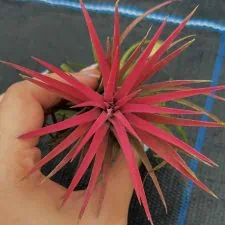
Tillandsia air plants are a diverse genus of over 650 species within the bromeliad family, ranging from tiny silvery rosettes to dramatic, trailing forms that flourish without soil. Knowing the different types helps you choose the right variety for your home, climate, and care routine.
What Are the Different Types of Tillandsia, Including Tillandsia Bulbosa?
The Tillandsia genus is extraordinarily varied, and most growers are surprised to discover just how different individual species can look from one another. At one end of the spectrum you have compact, globe-shaped varieties like Tillandsia ionantha, which blush vivid red as they approach bloom; at the other, you find sprawling architectural forms like Tillandsia xerographica, with broad, silvery-grey leaves that curl dramatically at the tips.
Tillandsia bulbosa deserves particular attention because it stands apart from many of its relatives in a striking way. It has a hollow, bulbous base that, in the wild, is actually inhabited by ants, which help protect the plant from predators. In cultivation, it thrives in humid conditions and develops long, twisting green leaves that curl outward from its distinctive swollen base, making it one of the most visually dramatic types of Tillandsia air plants you can grow indoors.
Looking for Haworthias? Check out our Award Winning Haworthia Collection

What Is the Lifespan of a Tillandsia Air Plant?
Most types of Tillandsia air plants are monocarpic, meaning each individual plant blooms only once before it gradually dies back. That single bloom can be spectacular, often producing vivid purple, pink, red, or yellow flowers, and it can last anywhere from a few days to several months depending on the species and growing conditions.
The full lifespan of a Tillandsia air plant typically ranges from two to five years for smaller species, with some larger varieties like T. xerographica living considerably longer under good care. Crucially, just before or after flowering, the mother plant produces offshoots known as “pups,” and these small clones will go on to grow into full plants themselves. This natural clumping process means a well-tended Tillandsia collection can essentially continue indefinitely, even though individual plants are finite.
| Tillandsia Species | Average Lifespan | Typical Bloom Duration | Pup Production |
|---|---|---|---|
| T. ionantha | 2-4 years | 1-3 weeks | High (2-8 pups) |
| T. xerographica | 5-10+ years | 3-6 months | Moderate (1-3 pups) |
| T. bulbosa | 3-5 years | 2-4 weeks | Moderate (2-4 pups) |
| T. caput-medusae | 3-5 years | 2-6 weeks | Moderate (2-5 pups) |
| T. stricta | 2-4 years | 1-4 weeks | High (3-7 pups) |
| T. brachycaulos | 2-4 years | 2-4 weeks | Moderate (2-4 pups) |
Understanding lifespan expectations prevents unnecessary concern when a mature plant begins to decline after flowering. The Royal Botanic Gardens, Kew classifies Tillandsia within the Bromeliaceae family and notes that the pup cycle is central to how these plants propagate in the wild, reinforcing that decline after first bloom is a natural and expected process rather than a sign of poor care.
How to Care for Different Types of Tillandsia Air Plants
One of the greatest misconceptions about types of Tillandsia air plants is that because they require no soil, they also require very little attention. In practice, Tillandsias need consistent watering, appropriate light, and good air circulation to thrive, though their care is far more forgiving than many traditional houseplants. Most varieties do best when misted two to three times per week or soaked for 20 to 30 minutes once a week, then allowed to dry completely within four hours to prevent rot.
Light requirements vary considerably across species. Mesic types such as T. bulbosa and T. stricta prefer indirect, filtered light and higher humidity, making them well-suited to bathrooms or kitchens in UK homes. Xeric types, characterised by their heavy trichome coating (like T. tectorum or T. xerographica), are adapted to brighter, drier conditions and can tolerate a few hours of gentle direct morning sun without issue.
Looking for Specialist Haworthias? Check out our Rare Haworthia Collection

Everything You Need to Know About Types of Tillandsia Air Plants
The world of Tillandsia air plants is far richer than most newcomers expect, and the variety available to UK growers today reflects just how adaptable this genus genuinely is. From the petite, blush-prone T. ionantha that fits in the palm of your hand, to the sweeping architectural presence of T. xerographica draped across a shelf, there is a species to suit every taste, space, and skill level. Understanding the different types not only helps you make a better purchasing decision but also ensures you can give each plant the specific care it actually needs.
Perhaps the most important takeaway from exploring the different types of Tillandsia air plants is that variety selection should be guided by your home environment, not just aesthetics. A mesic species placed in a dry, centrally heated room will struggle, just as a xeric species kept in a permanently shaded corner will never truly thrive. Matching the plant’s natural habitat preferences to your available conditions is the single biggest factor in long-term success.
Tillandsias are also among the most adaptable plants for creative display, which is why they have become a firm favourite with UK interior enthusiasts and plant collectors alike. Mounted on driftwood, displayed in geometric frames, arranged in glass terrariums, or simply rested on a windowsill, these plants reward thoughtful placement. With the right species chosen and basic care understood, types of Tillandsia air plants offer some of the most rewarding and low-maintenance indoor growing experiences available.
- Tillandsia is a genus of over 650 species; popular UK varieties include T. ionantha, T. xerographica, and T. bulbosa, each with distinct care needs and visual characteristics.
- Most types of Tillandsia air plants are monocarpic and bloom once, but produce pups that carry the plant lineage forward, making them a long-term investment with consistent care.
- Matching your chosen Tillandsia species to your home’s light and humidity levels is essential; mesic types prefer indirect light and humidity, while xeric types tolerate drier, brighter conditions.
Our Most Popular Succulents
-

Ottershaw Cacti Succulent Fertiliser – Everything succulents need to flourish
£7.50Ottershaw Cacti Succulent Fertiliser - Give your plants everything they need to flourish.
Buy Now -
Aeonium ‘Jubilee’ – Award Winning Succulent Plant
£10.00Launched May 2022 at RHS Chelsea Flower Show. This lollipop-shaped plant with glorious copper...
Buy Now -
Aeonium arboreum ‘Luteovariegatum’- Tall Succulent AKA ‘Variegatum’
£10.00Awarded AGM. Variegated tall upright, freely branching Aeonium.
Buy Now -
Aeonium ‘Toffee Apple’ – Ottershaw Hybrid Succulent
£10.00A Striking compact Aeonium filled with light purple coloured medium heads with vibrant green...
Buy Now -
Aeonium ‘Zwartkop’ – Black Rose / Bold, Dark Succulent
£8.50Awarded AGM. Popular tall growing, single headed, dark leaved Aeonium
Buy Now -
Aeonium ‘Kiwi’ – Beautiful Blush-tipped Aeonium AKA ‘Dream Color’
£8.50Recently awarded AGM. A delightful hard leaved variegated bush forming Aeonium, with variegated yellow,...
Buy Now -
Aeonium ‘Pink Witch’ – Vibrant Pink House-Leek
£25.00Aeonium 'Pink Witch' has fantastic PINK colouring which she keeps all year round. Rare...
Buy Now -
Aeonium ‘Black Velvet’ – Intensely Dark
£10.00Intensely dark and matt headed Aeonium. Leaves are short and heads compact with fewer...
Buy Now -
Aeonium ‘Colossus’ – Oversized Dark Rosette
£10.00It grows BIG! Each Aeonium heads can grow 35cm+ when potted on and fed....
Buy Now -
Aeonium ‘Nights Watch’ – Award winning Succulent
£10.00Award winning, upright growing, compact, dark leaved plant that forms an unusual pyramid shape.
Buy Now


Types of Tillandsia Air Plants: Frequently Asked Questions
What exactly are Tillandsia air plants and why do they need no soil?
Tillandsia air plants are epiphytes, meaning they naturally grow on other surfaces such as tree branches or rocks rather than in ground soil. They absorb moisture and nutrients directly through specialised scales on their leaves called trichomes, making soil not just unnecessary but actually harmful to their roots.
How many types of Tillandsia air plants are there in total?
The Tillandsia genus contains over 650 recognised species, making it the largest genus within the bromeliad family. You can find a comprehensive overview of the genus and its classification on the Wikipedia page for Tillandsia, which covers the full taxonomic background.
What are the easiest types of Tillandsia air plants for beginners in the UK?
T. ionantha and T. stricta are widely considered the most beginner-friendly species because they are hardy, readily available, and tolerant of the humidity variations common in UK homes. Both produce reliable blooms and pups with straightforward misting care.
Do all types of Tillandsia air plants flower?
Yes, all Tillandsia species are capable of flowering, though the timing, colour, and duration of the bloom varies considerably between species. Some flowers last only a few days, while those of T. xerographica can persist for several months.
What is the difference between mesic and xeric types of Tillandsia?
Mesic Tillandsias originate from humid, cloud forest environments and have smoother, greener leaves that need frequent watering and indirect light. Xeric types come from drier, more exposed habitats and have heavily trichome-covered, silvery foliage that stores moisture more efficiently.
Can types of Tillandsia air plants survive in the UK climate outdoors?
Most Tillandsia species are frost-tender and cannot survive UK winters outdoors, as they originate from tropical and subtropical regions of Central and South America. They should be kept indoors year-round in the UK, though they can be placed outside in sheltered spots during warm summer months.
How often should I water my Tillandsia air plant?
Misting two to three times per week or a 20 to 30 minute soak once per week is the standard recommendation for most types of Tillandsia air plants. After soaking, always shake off excess water and allow the plant to dry upside down within four hours to prevent rot at the base.
What light conditions do different types of Tillandsia air plants need?
Most types prefer bright, indirect light and should be placed within one to two metres of a window in a UK home. Direct afternoon sun should be avoided for mesic types, while xeric species with heavy silver coatings can tolerate a short period of gentle direct morning light.
Are Tillandsia air plants toxic to pets or children?
Tillandsia air plants are non-toxic to cats, dogs, and humans, which makes them one of the safest houseplant choices for households with pets or young children. The Dogs Trust confirms that bromeliads as a family are not listed among plants that pose a poisoning risk to dogs.
Why has my Tillandsia air plant turned brown at the tips?
Brown leaf tips are most commonly a sign of under-watering or low humidity, both of which are frequent issues in UK homes during the central heating season. Increasing your misting frequency and grouping plants together to raise ambient humidity around them will generally resolve the problem.
What fertiliser should I use on types of Tillandsia air plants?
A bromeliad or orchid fertiliser diluted to a quarter of the recommended strength is suitable for feeding Tillandsias, applied once a month during spring and summer. Avoid fertilisers containing copper or boron, as these are toxic to the Tillandsia genus even at low concentrations.
How do I know when my Tillandsia air plant is about to bloom?
Many species show a colour change in their central leaves as a bloom signal; T. ionantha turns vivid red, T. brachycaulos flushes orange-red across its entire body, and T. bulbosa develops a reddish tint at its base. These colour changes are caused by a hormone response triggered by the plant’s preparation for reproduction.
How do I separate pups from the mother Tillandsia plant?
Pups should be left attached to the mother plant until they reach at least one third of her size, at which point they can be gently twisted and pulled away without damaging either plant. The Royal Horticultural Society (RHS) provides general guidance on bromeliad division that applies well to the Tillandsia genus.
Where can I buy types of Tillandsia air plants in the UK?
Tillandsia air plants are available from specialist houseplant retailers, garden centres, and online suppliers throughout the UK, with the widest species selection typically found through dedicated air plant or tropical plant nurseries. Prices range from around £3 to £25 depending on species size and maturity, with rarer forms such as T. xerographica commanding a premium.